
Transition to Mirrorless: The Nikon Z8

Underwater Photography
Starting with this issue, underwater photography champion Francesco Visintin will explore several technical aspects related to the evolution of equipment — with the aim of understanding it more deeply and learning how to use it to its full potential.
In this article, he examines the comparison between DSLR cameras and the new generation of mirrorless models: lighter, more advanced, and far more capable. A historic turning point in photographic technology that opens new and fascinating operational horizons — but one that also requires a thorough understanding of the new functions and the exciting creative possibilities these cameras offer.
He discusses these topics through one of the newest and most widely adopted models among professionals and enthusiasts alike: the Nikon Z8, whose features and performance can also be considered representative of other high-end models from different manufacturers.
Editor-in-Chief Umberto Natoli
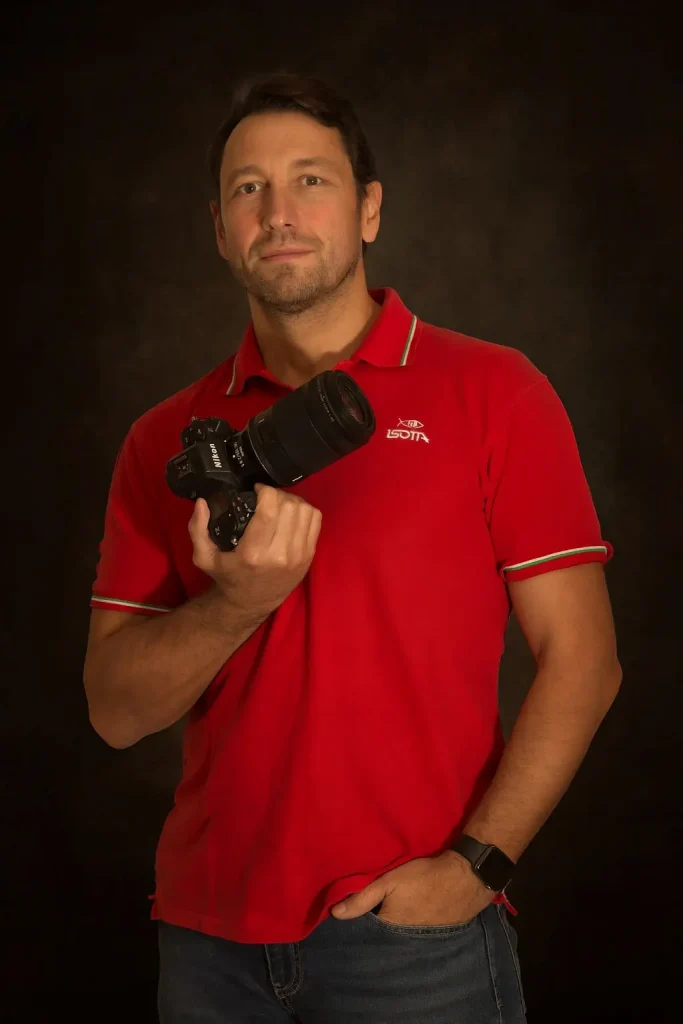
Transition to Mirrorless: The Nikon Z8 and the Isotta Housing
by Francesco Visintin
Foreword
The following reflections stem from my direct experience with the Nikon Z8 mirrorless camera. My aim is not to analyze a single model, but rather to share impressions and insights useful to anyone considering the switch to mirrorless. Many of the observations on usability can be extended to other mid-to-high-end cameras from major brands such as Sony and Canon.
Introduction – A Change of Era
It is hard to describe the thrill of diving into the water for the first time with a new camera. After twenty years spent with DSLRs as my inseparable companions, deciding to change systems was no small choice. When, in November 2023, I got my hands on the Nikon Z8, curiosity outweighed any real necessity. My D7200 was still delivering great satisfaction, but I felt the DSLR era was drawing to a close.
In the months leading up to the purchase, I heard contrasting opinions from fellow photographers: some were enthusiastic about mirrorless, while others were so disappointed they returned to DSLRs. I too had doubts, especially about battery life and the usability of the electronic viewfinder (EVF). Yet the promise of a mature technology, together with positive reviews and my trust in Nikon, pushed me to take the leap.
Initially, I planned to use the Z8 only for land photography, but within days I realized I would never go back. Its potential was such that it revolutionized my way of shooting. So, I sold my beloved D7200 and contacted Isotta for the “new suit”: a dedicated housing, coral-red and ready to dive with me.
No new camera will make us better photographers, but modern tools open new possibilities. They reduce errors, increase the chances of capturing the “perfect moment,” and reignite our curiosity. For many, myself included, the upgrade is also emotional: the desire to discover, experiment, and feel like beginners again in a constantly evolving world. The Z8 gave me that sensation from the very first use.

Image Quality
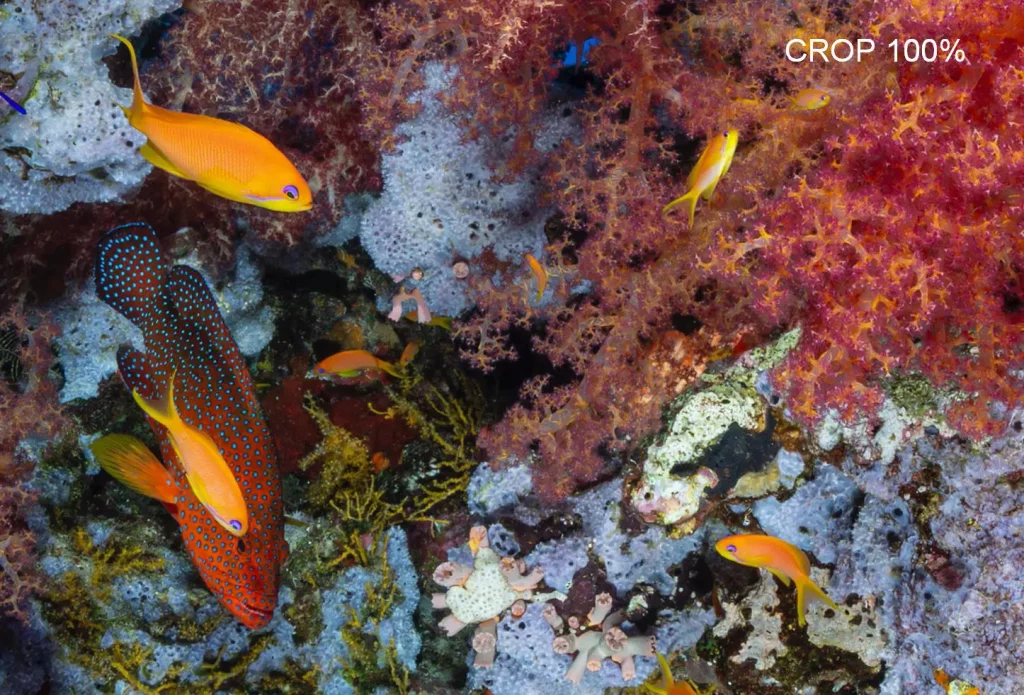
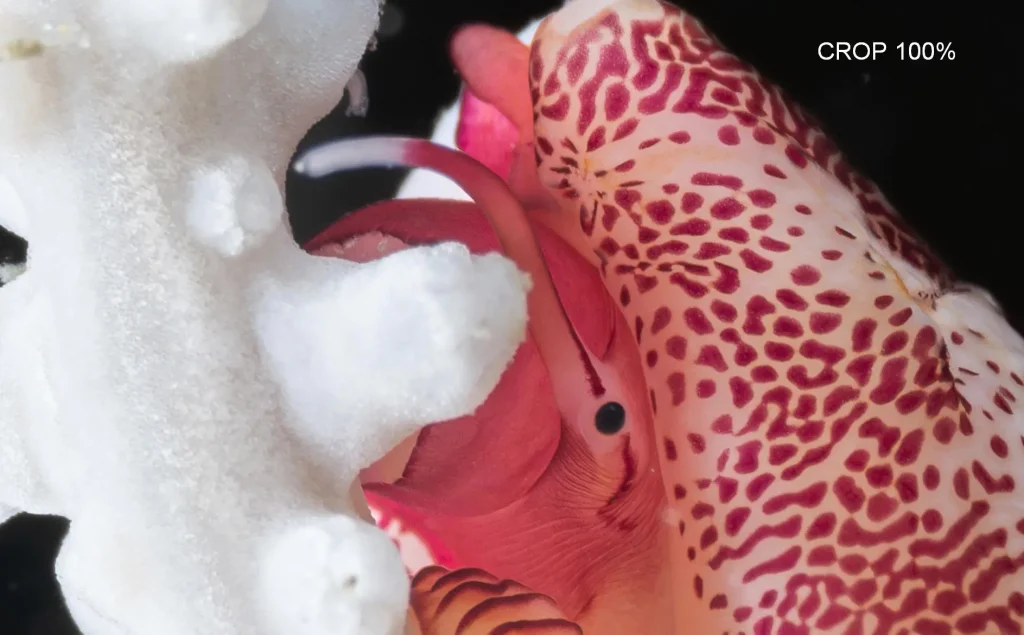
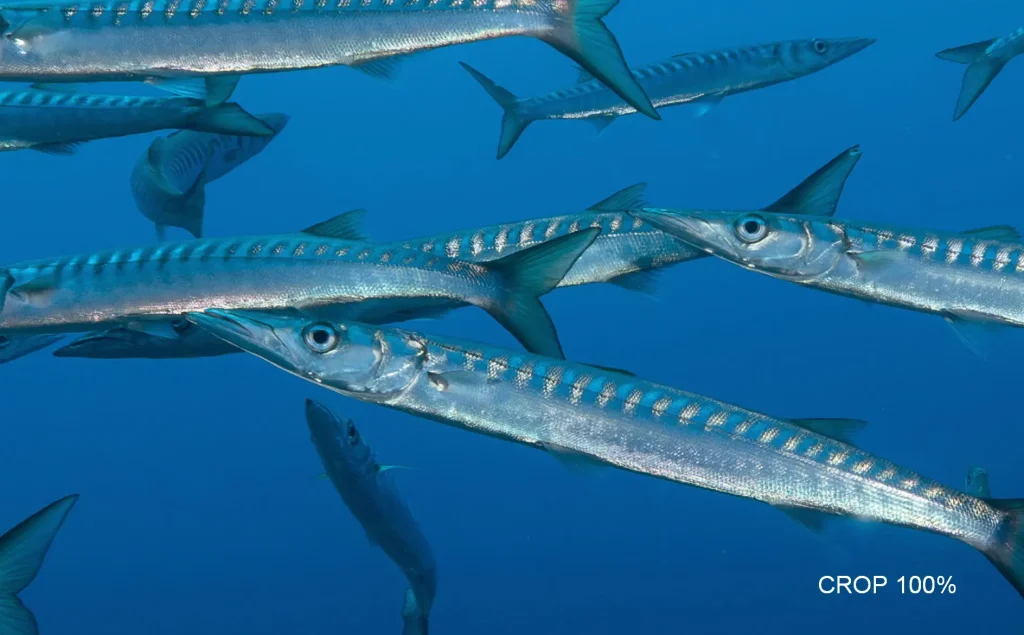
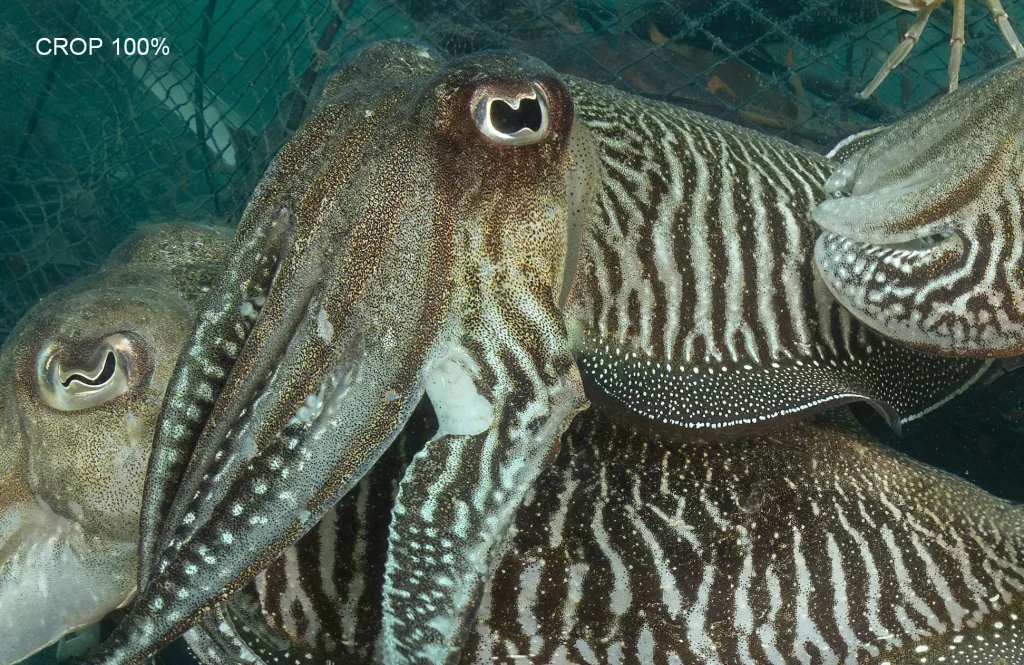
One of the first confirmations was image quality. The 45-megapixel RAW files generated by the Z8’s stacked sensor are incredibly detailed. Sharpness and post-production flexibility are remarkable, well beyond the needs of most photographers, even professionals. Compared to Nikon’s high-end DSLR (D850), the Z8 shows some differences: dynamic range may be slightly lower in highlights, but it performs better at high ISO.
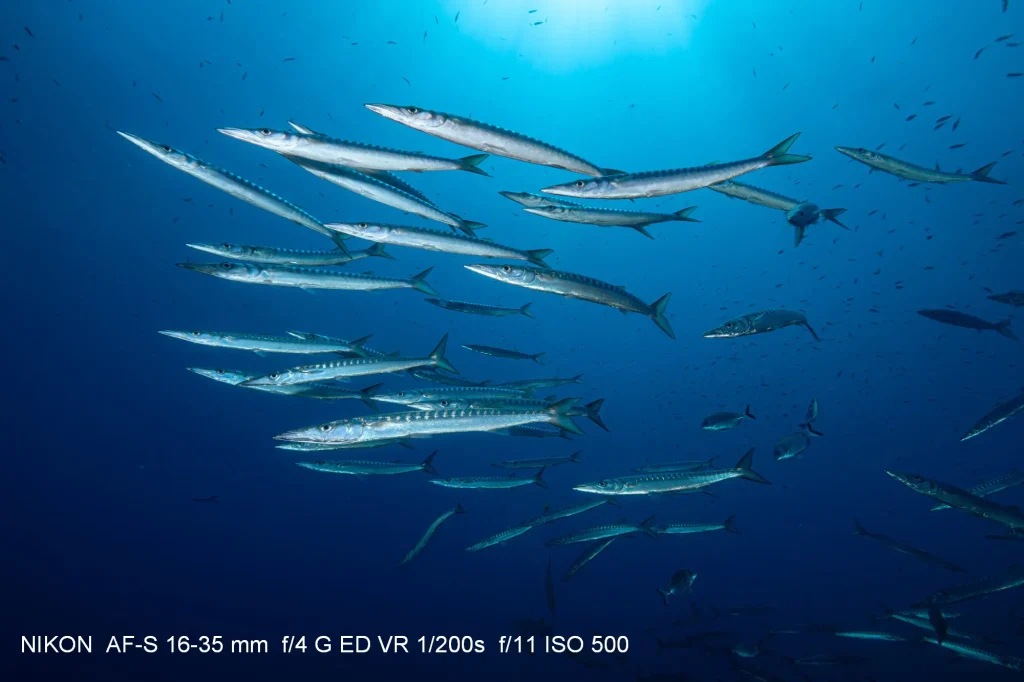
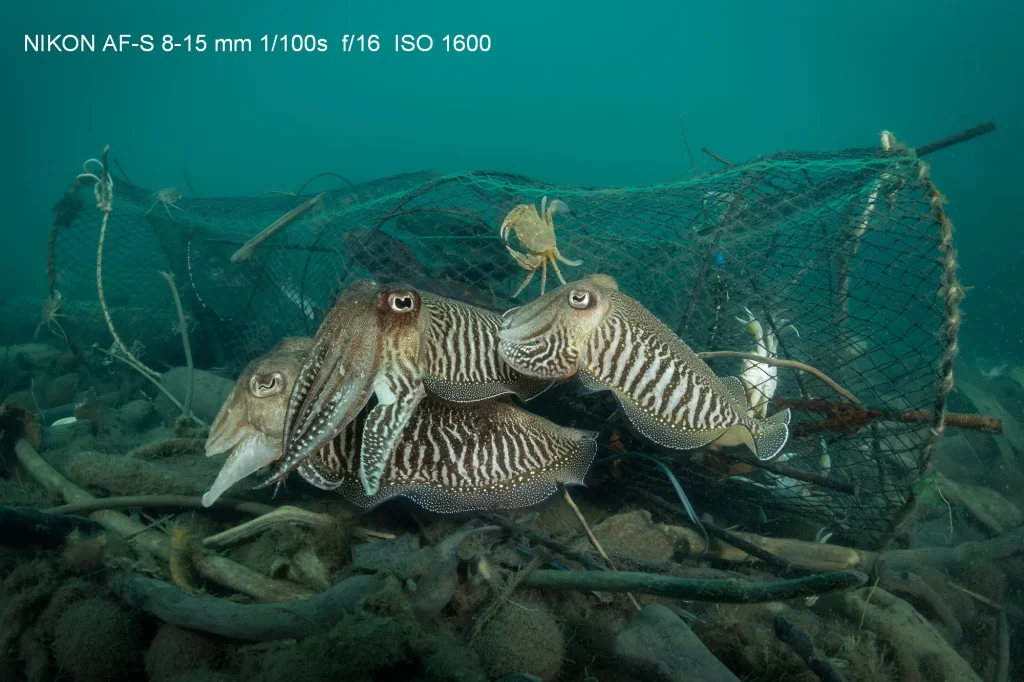
This means cleaner, noise-free images even at elevated sensitivities—a major advantage during deep dives, twilight, or cave photography. In macro, paired with the Nikkor Z MC 105 mm f/2.8 VR S, definition is extraordinary and autofocus lightning-fast, silent, and precise. Wide-angle results are excellent too, even with budget-friendly Viltrox rectilinear lenses (20 f/2.8 and 14 f/4) and the classic Nikkor 8–15 mm fisheye via FTZ II adapter. Manual white balance is extremely accurate, delivering natural tones in ambient light down to 10–12 meters, simplifying post-production and reducing the need for filters.
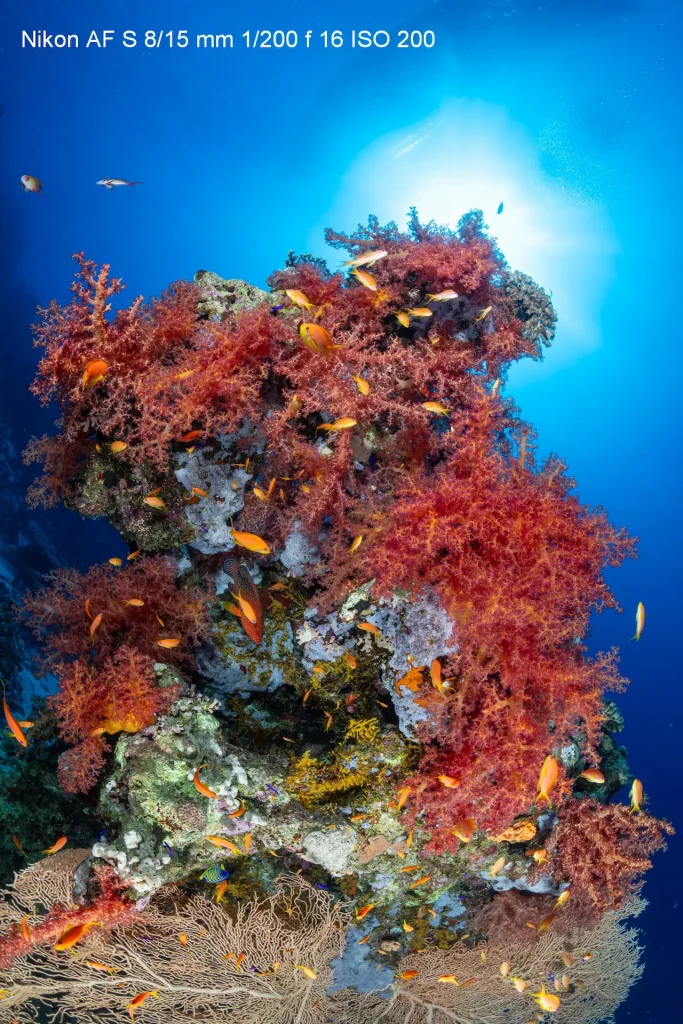
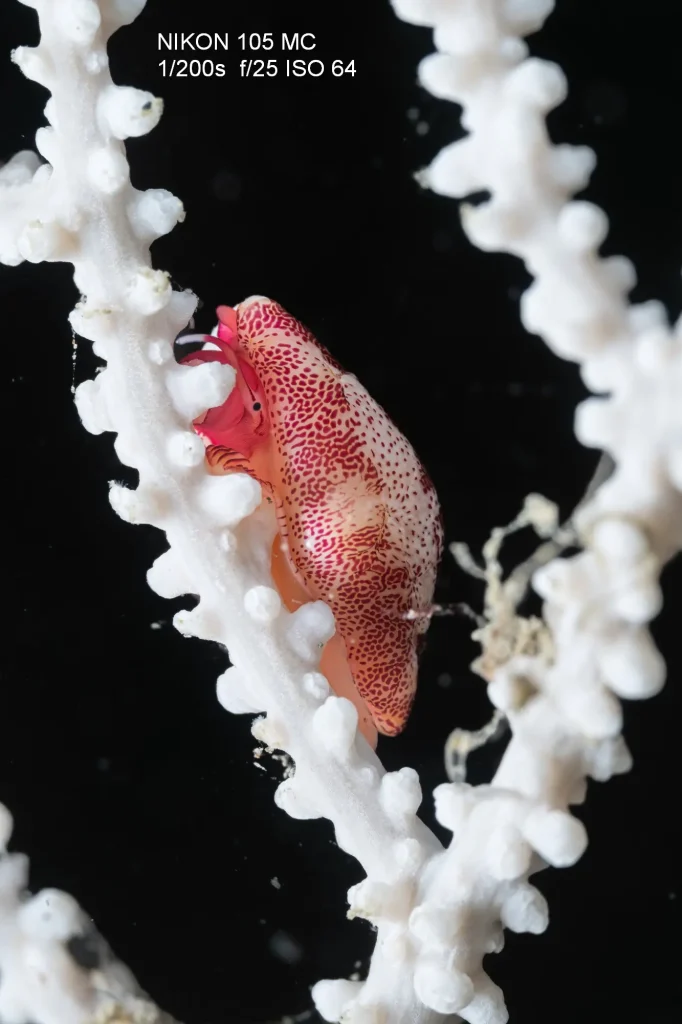
The Electronic Viewfinder: Seeing Before Shooting
For many, the EVF is the main psychological barrier to switching. I too feared lag, unnatural rendering, and difficulties in backlight. But once underwater, my perception changed radically. The Z8’s EVF allows me to work without ever removing my eye from the viewfinder or my hands from the housing. I can review shots, navigate menus, and adjust settings while keeping the frame—without disturbing the subject or stirring sediment.
It’s like having a portable darkroom, perfect even for those dealing with presbyopia thanks to diopter correction. The EVF shows the final image in real time: exposure, contrast, white balance, even black-and-white effects. For flash shooting, the camera optimizes vision, delivering bright, contrasty previews even in low light. The EVF is fast, lag-free, blackout-free, and customizable. Overall, it gives total control of the scene—I would never go back.

LCD and External Monitors: Freedom to Frame
Mirrorless cameras like the Z8 allow the rear display to be used with the same autofocus performance as the EVF. This is a huge difference from DSLRs, where live view AF was slow and inaccurate. Underwater, this opens new possibilities: approaching subjects while keeping the frame visible, sliding the camera under overhangs without stirring sediment, or getting closer to shy animals with minimal disturbance.
For video, or simply a larger view, external 5” or 7” HDMI monitors can be connected with full AF compatibility. Focus peaking and digital zoom further enable precise manual focusing.
Autofocus: The Heart of the Revolution
If I had to name one reason to switch, it would be autofocus. The Z8 marks a huge leap compared to any previous Nikon DSLR, and even earlier mirrorless generations like the Z6II and Z7II. Its hybrid system—phase and contrast detection—delivers extraordinary speed and precision.
With 493 AF points covering the entire frame, compositional freedom is unprecedented. Of the twelve AF modes, three are most useful underwater:
- Single-point AF: perfect for static subjects and precision macro.
- 3D Tracking: keeps a chosen point in focus even when reframing, ideal for fish and moving subjects.
- Auto-area AF: excellent for dynamic scenes or tricky lighting.
- Working in AF-C (continuous) is essential underwater, and with native Z lenses, focus is smooth, fast, and silent

Battery, Flash Sync, and Real Limits
Battery life was one of my biggest concerns. Official CIPA ratings declare 340 shots per charge—a limitation underwater, where swapping batteries mid-dive is impossible. Yet in practice, the Z8 proved far more efficient: with a fully charged EN-EL15c, I easily manage two dives, about four hours of continuous use and thousands of shots.
The only technical drawback compared to DSLRs is flash sync speed: 1/200s versus 1/250s on the D850 or 1/400s on the Sony A1. Usually not a problem, but in bright tropical waters or shallow sandy bottoms it can be annoying. Fortunately, working at base ISO (64 or 32) and closing the aperture solves it—provided you have powerful strobes.
At base ISO, dynamic range and micro-contrast are exceptional.

Lenses and Compatibility
A major Nikon advantage is lens reuse. With the FTZ II adapter, AF-S lenses work perfectly: 8–15 fisheye, 16–35, 60 micro, 105 micro, etc. AF-D lenses lose autofocus but remain usable manually. Adapters also exist for Canon EF and Sony E-mount, maintaining full compatibility.
Native Z lenses, however, deliver the best experience: ultra-fast, silent stepper motors and excellent performance. The Z 100 macro and 14–30 mm f/4 S are prime choices for underwater photography.
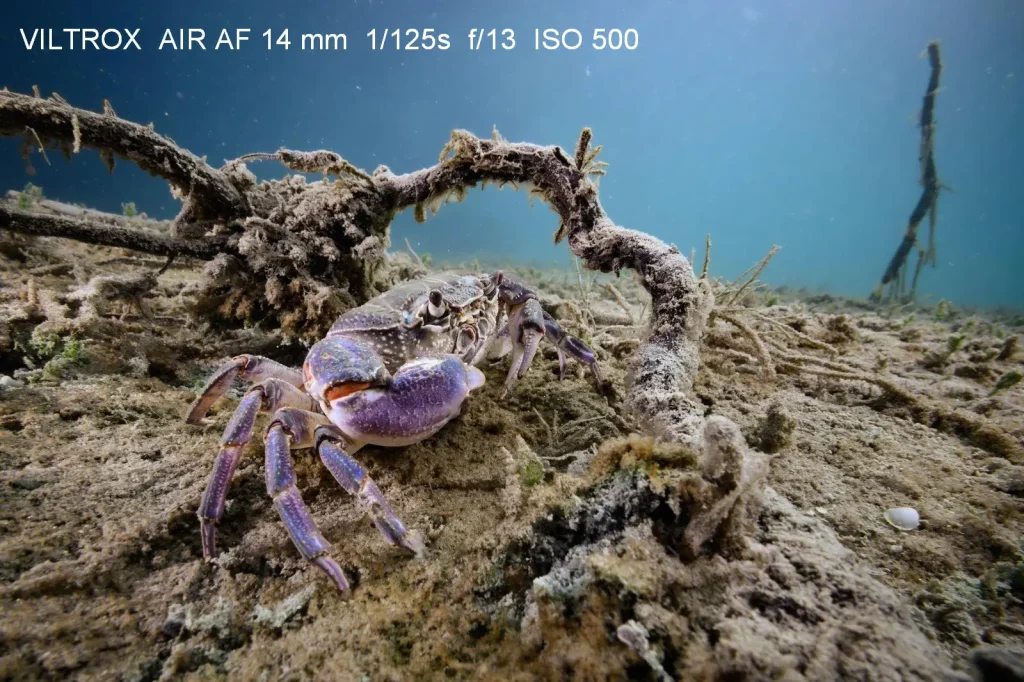
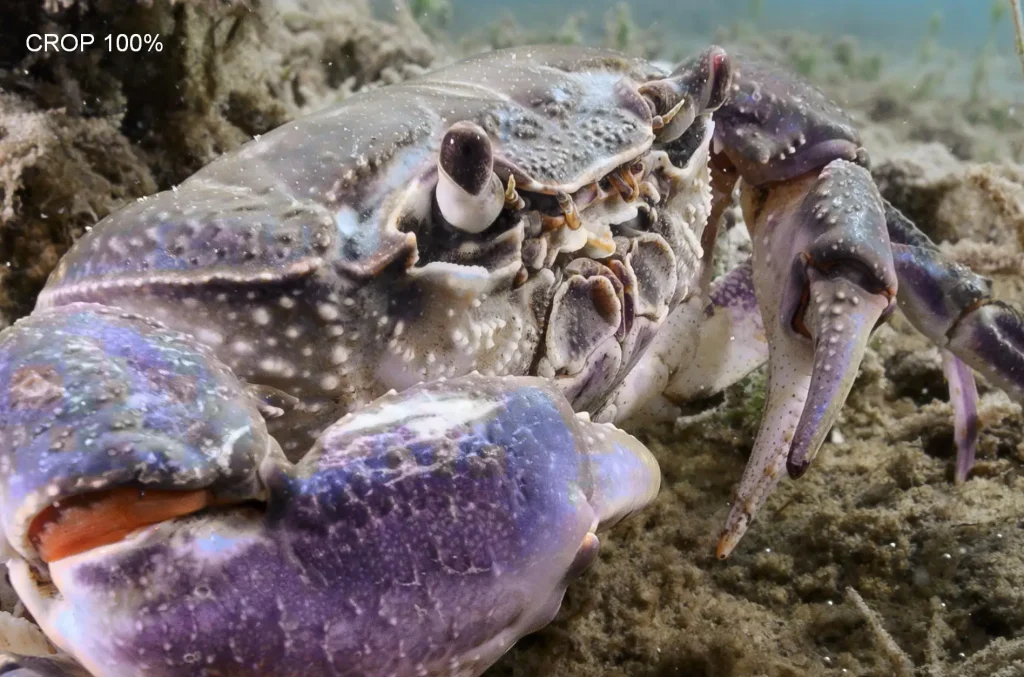
In recent years, third-party Chinese lenses have exploded, offering compact, surprisingly high-quality options at much lower cost. Viltrox, for example, produces compact stepper-driven lenses ideal for underwater use. The Viltrox 20 mm f/2.8 and especially the 14 mm f/4 Air, with its 112° field of view and 13 cm minimum focus distance, are excellent for close-focus wide-angle shots even with small domes.
Stabilization and Creative Control
The Z8 features in-body stabilization (IBIS) working seamlessly with lens VR (Synchro VR). This allows sharp shots even at 1/20s with macro or wide-angle lenses. It’s invaluable for balanced blue backgrounds or panning techniques. For video, stabilization is a major advantage.
Customization and Shooting Banks
The Z8 is highly sophisticated, with hundreds of settings. This can be both a strength and a frustration. Some users abandon mirrorless due to the learning curve. But with patience, customization becomes a strength. Four shooting banks allow saving setups for different scenarios (macro, wide-angle, ambient light, B&W) and recalling them quickly underwater. Buttons are fully configurable, making the camera an extension of the photographer.

“Auto-Capture and Advanced Features”
Since firmware 2.0, Nikon introduced Auto-Capture, turning the Z8 into a kind of camera trap. It can shoot autonomously, triggered by movement, distance, or subject recognition. Limited to 3–4 hours of autonomy, it nonetheless offers fascinating opportunities to document animal behavior without human disturbance.

The Isotta Housing: The Perfect Suit
Isotta’s housing for the Z8 strikes the perfect balance between aesthetics and functionality. Similar in size and weight to the D850 housing, but with better buoyancy—virtually neutral underwater. Anodized aluminum build, ergonomic controls, and mechanical precision meet Isotta’s high standards.

The Pleasure of Discovery
After nearly two years of use, I can confidently say that switching to mirrorless was the right choice. It’s not just about numbers or image quality: it’s a new way of photographing, more immediate, more engaging.
That said, DSLR cameras are far from obsolete. On the contrary, they still deliver performance more than adequate for any need and, for many, provide a familiar and reassuring shooting experience. Yet for those eager to grow, experiment, and harness the potential of new technologies, mirrorless systems open up a field rich with opportunity. The Nikon Z8, in particular, represents the perfect synthesis of the best in professional DSLRs (twice the speed and the same resolution as the D850) and the versatility of modern mirrorless, all while maintaining a robust and reliable build.
Today, when I dive beneath the surface, I feel I’m holding a tool that amplifies my ability to see and to tell the story of the underwater world.
If I had to give one piece of advice to those still undecided, it would be this: don’t be afraid to change. Technology doesn’t replace our eye, it guides us toward new horizons. Mirrorless cameras won’t make us better photographers, but they will encourage us to become better. In my case, the Z8 reignited the spark of curiosity I had at the beginning: the desire to explore, to understand, to experiment. And ultimately, it is this passion that keeps every underwater photographer alive, far more than any new sensor or autofocus algorithm.

Final Thoughts – Two Years Later
Everything I’ve shared comes from firsthand experience with the Nikon Z8—a camera that, when I decided to switch to mirrorless, stood as the only true alternative capable of delivering the technological and performance gains necessary to justify leaving DSLRs behind. At the time, the Z8 felt like a milestone—or perhaps a new beginning—for anyone seeking the highest standards of image quality and versatility. Unfortunately, that leap forward also required a substantial financial commitment, especially considering the need to update the housing and, to some extent, the lens lineup (on top of switching from DX to FX).
Today, two years on, the landscape has changed. Nikon—whose system I know best—and other manufacturers have released far more accessible models that inherit much of the technology and performance once exclusive to top-tier bodies like the Z8 and Z9. Cameras such as the Z50 II or Z5 II, powered by the same Expeed 7 image processor, now offer all the advantages of mirrorless shooting and virtually the same advanced autofocus capabilities at a fraction of the cost. Added to that is the benefit of a more compact build, with reduced weight both for the camera and the underwater housing, resulting in significant savings across the entire system.